
Kinematic Alignment: A Knee That Feels Natural
Written and medically reviewed by Rhett MacNeille, MD · Last reviewed August 24, 2026
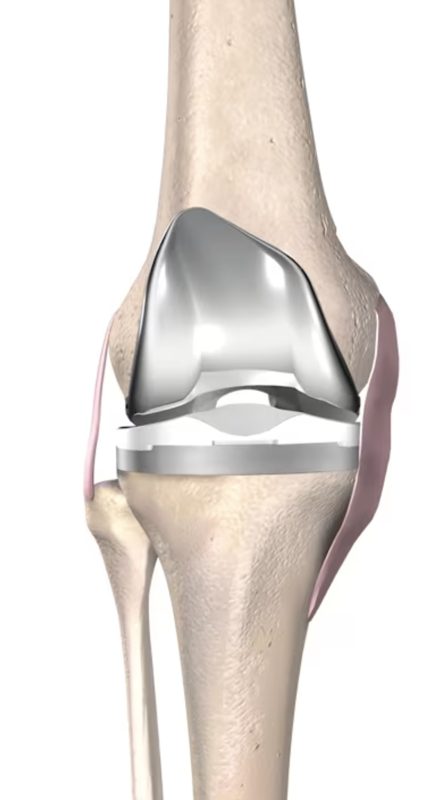
Some patients with a knee replacement say their new knee feels great — but others say it feels "not quite like my own knee." Surgeons have spent years studying why, and one important answer involves how the implant is aligned. Dr. MacNeille aims for a kinematic knee, using Mako robotic planning to restore the alignment your knee was born with.
Two Philosophies of Alignment
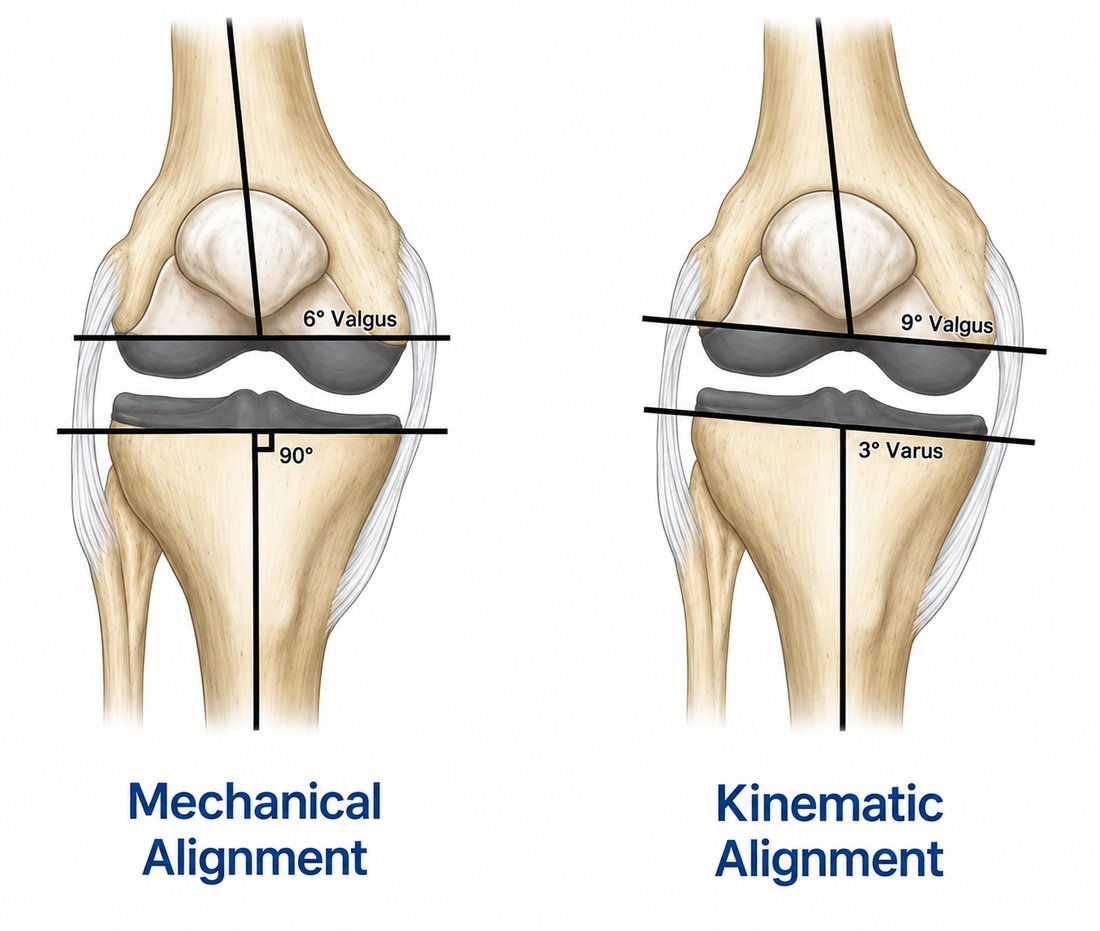
For decades, most knee replacements used "mechanical alignment." Every patient's knee was set to the same neutral, perfectly straight target — regardless of how their knee was naturally built.
"Kinematic alignment" takes a different view. Most healthy knees are not perfectly neutral; each has its own subtle angles and joint line. Kinematic alignment aims to rebuild your knee the way it was before arthritis changed it:
- Restoring your natural joint line, rather than an artificial average
- Respecting the natural tension of your ligaments, so less soft-tissue cutting and releasing is needed
- Letting the implant follow the way your knee actually moves
What the Research Shows
- A landmark randomized trial published in The Bone & Joint Journal in 2014 by Dossett and colleagues compared kinematic and mechanical alignment head-to-head. At two years, the kinematically aligned knees had better pain scores, better function, and better flexion.
- The same research team's long-term follow-up, published in The Journal of Arthroplasty in 2023, found those kinematically aligned knees continued to perform well many years later, without an increase in failures.
- A 2025 systematic review in Cureus found kinematic alignment offered small-to-moderate improvements in knee scores in the early and mid-term, fewer soft-tissue releases during surgery, and faster early recovery of knee bending.
To be balanced: not every study shows a difference. A 2025 meta-analysis in Archives of Orthopaedic and Trauma Surgery found both methods produce good results, with similar scores overall. What is consistent across the research is that kinematic alignment is at least as safe — and many patients seem to enjoy an easier early recovery and a more natural-feeling knee.
Where the Robot Comes In
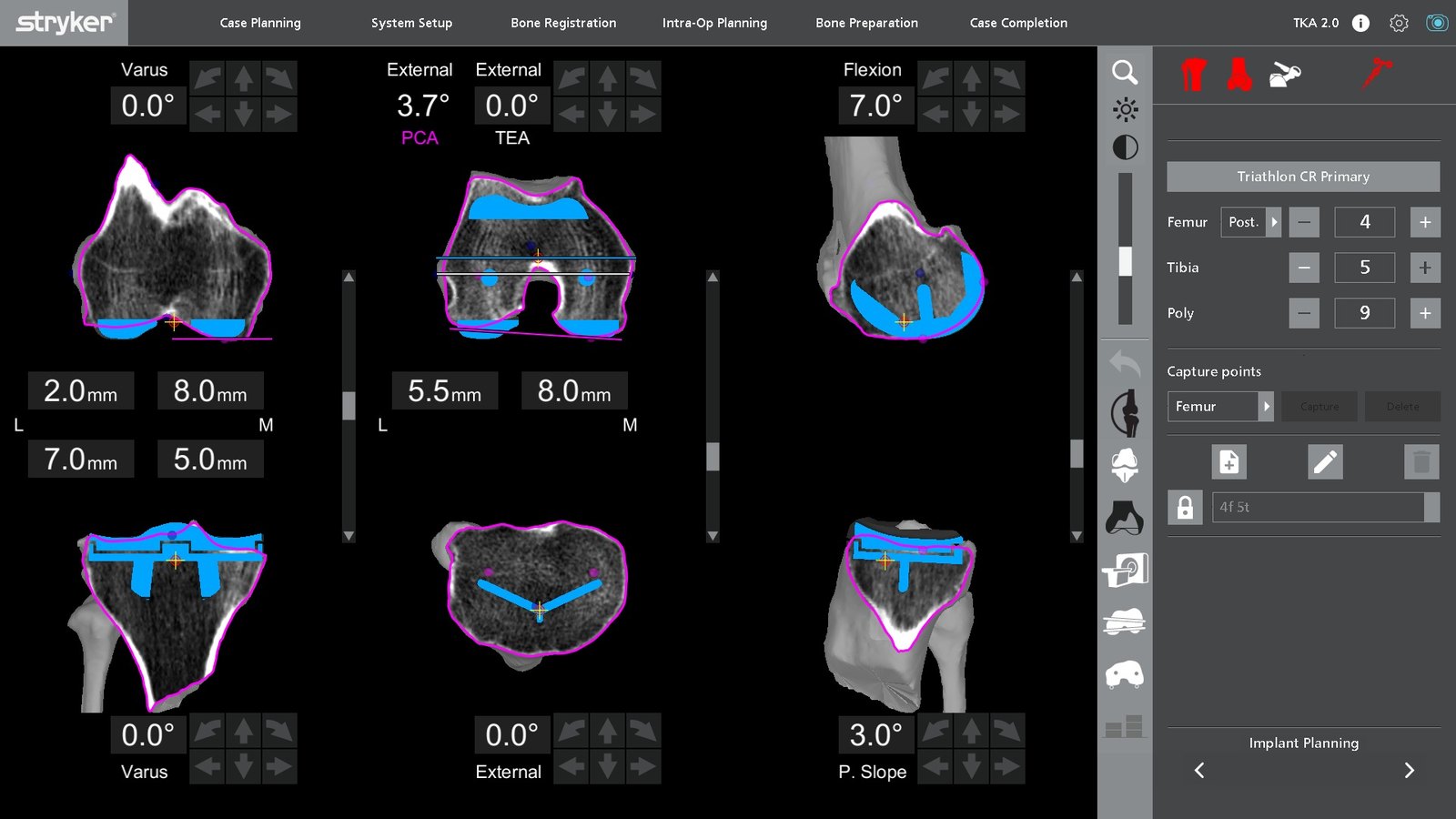
Recreating your knee's unique anatomy requires precision. Dr. MacNeille uses the Stryker Mako system's CT-based 3D planning to map your knee before surgery and set a personalized kinematic target. The robotic arm then helps execute that plan within a millimeter, so the knee you get is the knee that was planned.
The Goal: A Knee You Forget About
The best compliment a knee replacement can receive is that its owner stops thinking about it. By aiming to restore your natural alignment and ligament balance, kinematic alignment is designed to help your new knee feel less like hardware — and more like you.
Contact our office if you would like to discuss whether a kinematically aligned knee replacement is right for you.
References
- Dossett HG, et al. A randomised controlled trial of kinematically and mechanically aligned total knee replacements: two-year clinical results. The Bone & Joint Journal, 2014.
- Dossett HG, et al. A Randomized Controlled Trial of Kinematically and Mechanically Aligned Total Knee Arthroplasties: Long-Term Follow-Up. The Journal of Arthroplasty, 2023.
- Alrehaili A, et al. Functional Outcomes and Patient Satisfaction in Kinematic vs Mechanical Alignment Total Knee Arthroplasty: A Systematic Review. Cureus, 2025.
- Migliorini F, et al. Mechanical versus kinematic alignment for total knee arthroplasty: a meta-analysis. Archives of Orthopaedic and Trauma Surgery, 2025.
This article is for general education and is not a substitute for medical advice.
Ready to talk about your hip or knee? Request an appointment and our team will contact you within 1–2 business days.