
The Direct Superior Approach to Hip Replacement: A Muscle-Sparing Option
Written and medically reviewed by Rhett MacNeille, MD · Last reviewed August 24, 2026
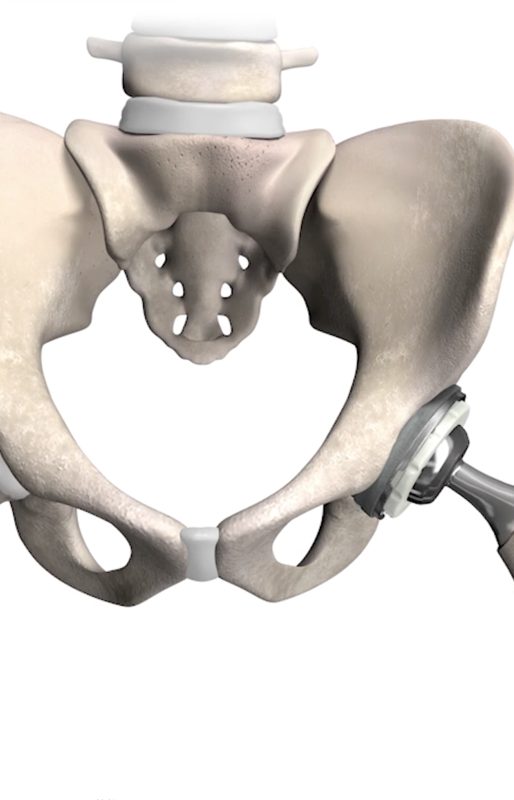
If you need a hip replacement, you may be surprised to learn that how the surgeon reaches your hip joint matters almost as much as the new joint itself. Dr. MacNeille performs hip replacement through the direct superior approach, a modern, minimally invasive technique designed to protect the muscles and tendons around your hip.
What Makes This Approach Different?
In a traditional posterior hip replacement, the surgeon must release the iliotibial (IT) band — the long band of tissue running down the outside of your thigh — along with several small muscles that stabilize the hip. The direct superior approach uses a smaller incision placed higher on the hip and works between tissues rather than through them.
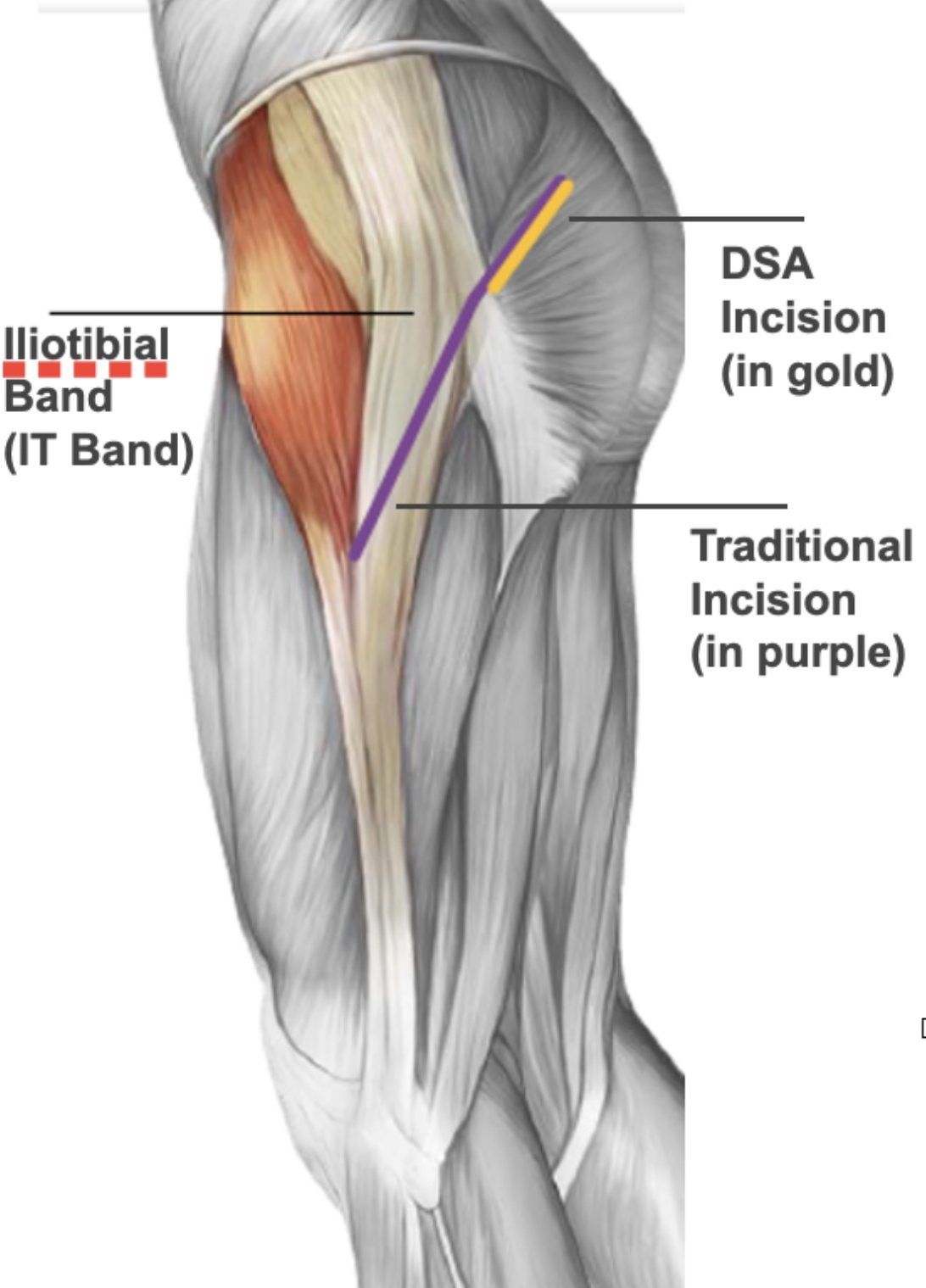
Key structures that are protected include:
- The IT band, which is left completely intact
- Most of the short external rotator muscles, the small stabilizers at the back of your hip
A 2024 systematic review in JBJS Reviews by Van Dooren and colleagues confirmed that the direct superior approach preserves the IT band and most of the short rotators, and found that hip implants were consistently placed within the recommended "safe zone" for stability.
What Does the Research Show?
Because less soft tissue is disturbed, patients tend to get moving sooner. A 2024 meta-analysis in the Journal of Clinical Medicine by Shin and colleagues, pooling studies that compared the direct superior approach to the standard posterior approach, found:
- Shorter hospital stays and a higher chance of going straight home
- Less blood loss and fewer transfusions
- Noticeably smaller incisions
- Better hip function scores at one month after surgery
Stability is another major advantage. The 2024 JBJS Reviews analysis cited a large registry study reporting a dislocation rate of just 0.3% with the direct superior approach, compared with 1.0% for the traditional posterolateral approach. Because the repair is so stable, many patients do not need the strict "hip precautions" (avoiding bending past 90 degrees, crossing the legs, and so on) that were once routine after hip replacement.
You might wonder whether a newer technique is riskier while surgeons learn it. Reassuringly, a 2020 study in Orthopaedic Surgery by Duijnisveld and colleagues found no meaningful learning curve — outcomes were consistent even in a surgeon's early cases.
How Dr. MacNeille Uses This Approach
Dr. MacNeille combines the direct superior approach with Mako robotic-arm assistance, which uses a CT scan of your hip to plan implant position with a high degree of precision. Together, the muscle-sparing exposure and robotic accuracy support the goals that matter most to patients: walking within hours of surgery, a low risk of dislocation, and — for most patients — no formal hip precautions during recovery.
Is It Right for You?
Most patients who need a hip replacement are candidates for this approach, though every hip is different. At your consultation, Dr. MacNeille will review your X-rays, anatomy, and health history to recommend the safest plan for you.
References
- Van Dooren B, Peters RM, van der Wal-Oost AM, Stevens M, Jutte PC, Zijlstra WP. The Direct Superior Approach in Total Hip Arthroplasty: A Systematic Review. JBJS Reviews. 2024.
- Shin KH, Kim JU, Jang IT. Early Postoperative Outcomes of the Direct Superior Approach versus the Posterior Approach in Total Hip Arthroplasty: A Systematic Review and Meta-Analysis. Journal of Clinical Medicine. 2024.
- Duijnisveld BJ, et al. No Learning Curve of the Direct Superior Approach in Total Hip Arthroplasty. Orthopaedic Surgery. 2020.
This article is for general education and is not a substitute for medical advice.
Watch: see it for yourself




Recovery videos courtesy of Dr. Lige Kaplan — Dr. MacNeille’s fellowship director and mentor — whose patients underwent the same minimally invasive techniques Dr. MacNeille uses today. Robotics videos and patient stories from Stryker and partner channels. We will be adding videos of our own patients over time. Browse the full video library →
Ready to talk about your hip or knee? Request an appointment and our team will contact you within 1–2 business days.