
Hip or Knee Pain? What to Expect — From Your First Visit to Joint Replacement Recovery
Written and medically reviewed by Rhett MacNeille, MD · Last reviewed August 24, 2026

Most people wait too long to have their hip or knee pain evaluated — often because they assume the only answer is surgery. In reality, treatment is a ladder, and surgery is the last rung, not the first.
Step 1: An accurate diagnosis
Your first visit centers on a careful history, an examination, and imaging:
- X-rays — the workhorse: they show joint space, alignment, and arthritis severity
- CT — used for detailed surgical planning, including robotic joint replacement
- MRI — helpful when the diagnosis isn't arthritis, such as meniscus tears or early avascular necrosis
Step 2: Non-operative care first
When the diagnosis allows, we start conservatively:
- Activity modification and physical therapy referral — strengthening the muscles around a joint measurably reduces pain
- Bracing and knee sleeves — support, warmth, and confidence for active days
- Injections — cortisone, gel, or PRP depending on your situation
Many patients live well for years on this rung of the ladder.
Step 3: When surgery makes sense
When pain limits your life despite good conservative care, replacement becomes the reliable answer:
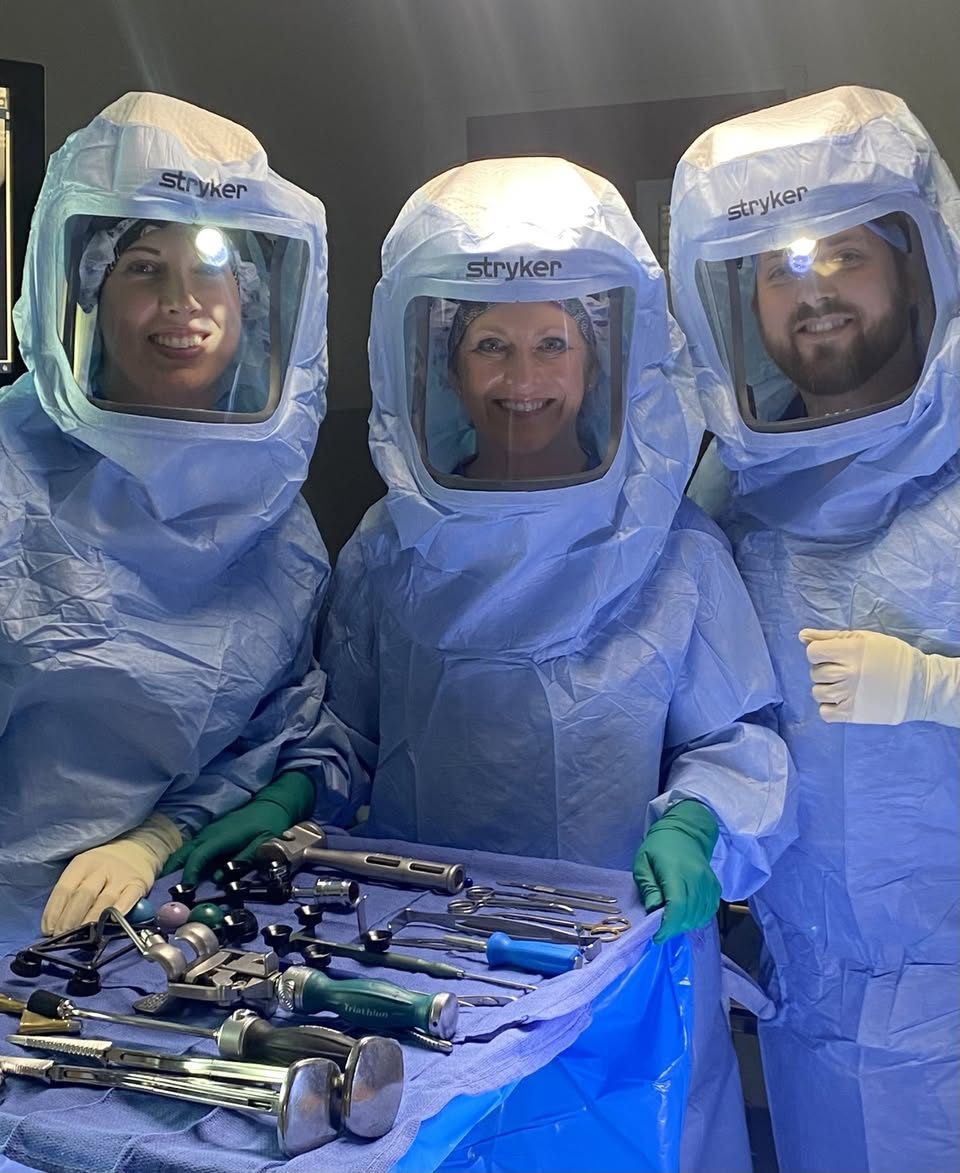
- Partial knee replacement — when only one compartment is worn, replacing just that part preserves your ligaments and feels remarkably natural
- Total knee replacement — Mako robotic-assisted, through a quadriceps-sparing approach, aiming for a kinematic, natural-feeling knee
- Total hip replacement — Mako robotic-assisted through a minimally invasive direct superior approach
- Revision hip and knee replacement — fellowship-trained care for joints replaced years ago that have worn or loosened
Step 4: Recovery — usually home the same day
Most healthy patients at our surgery center walk within hours and recover at home, not in a hospital bed. A clear plan covers pain control, therapy, and follow-up.
Want to see what recovery looks like? Watch real recovery examples on this orthopedic surgery channel while we build our own patient story library.
This article is for general education and is not a substitute for medical advice.
Watch: see it for yourself

Recovery videos courtesy of Dr. Lige Kaplan — Dr. MacNeille’s fellowship director and mentor — whose patients underwent the same minimally invasive techniques Dr. MacNeille uses today. Robotics videos and patient stories from Stryker and partner channels. We will be adding videos of our own patients over time. Browse the full video library →
Ready to talk about your hip or knee? Request an appointment and our team will contact you within 1–2 business days.